

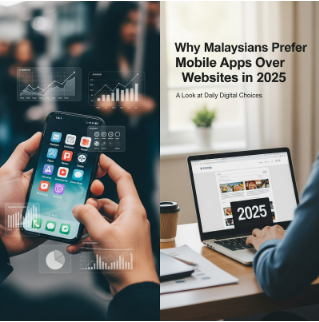
In 2025, Malaysians aren’t just mobile-first — they’re app-first.
Even when a website offers the same information or features, most users still choose the mobile app version. This shift has transformed how Malaysians search, shop, learn, and entertain themselves.
Why do apps dominate so strongly here?
The answer lies in our daily digital patterns.
- Apps Fit Malaysia’s “Tap-and-Go” Lifestyle
From Grab to Shopee to banking, Malaysians prefer actions that can be completed in one or two taps.
Apps do this better than websites because:
they store user sessions
they keep people logged in
buttons are designed for thumbs, not mice
actions are designed for speed
menus are predictable and familiar
Apps match the fast, multitasking rhythm of Malaysian daily life.
- Weak Mobile Data in Some Areas Makes Apps Perform Better
Even in 2025, Malaysia still has pockets of:
unstable mobile data
patchy 4G
heavily congested cell towers
Apps handle this better because they:
preload assets
store cached data
require less bandwidth for repeated actions
don’t reload the entire page like mobile browsers do
When your connection slows down, a website feels “heavy,” but an app still runs smoothly.
- Apps Offer Predictable Layouts Malaysians Trust
Apps rarely change drastically.
Websites often redesign or shift layouts.
Malaysians value consistency — especially when using apps daily.
This familiarity is why “guide” platforms structured for mobile-first reading perform better. Many app hubs — such as Mega888Today — present information in a layout that mirrors app-like simplicity: short sections, fast loading, thumb-friendly design, https://mega888today.com/
- Notifications Keep Malaysians Coming Back
Websites can’t send notifications.
Apps can — and Malaysians respond strongly to them.
Popular triggers include:
parcel updates
price drops
flash sales
bill reminders
content updates
game alerts
security notices
Notifications create a “micro-habit loop,” pulling users back into the app multiple times a day.
- Apps Handle Malaysian Multitasking Better
Malaysians rarely use one app at a time.
The usual pattern:
Scroll TikTok
Switch to WhatsApp
Check Shopee
Back to TikTok
Reply Telegram
Open banking app
Lock phone
Apps are optimized for this rapid switching.
Mobile browsers are not.
Apps keep users in the exact place they left off.
Browsers reload pages or lose scroll positions — especially on older devices.
- Apps Feel “Personal” in a Way Websites Don’t
Apps can personalize:
recommendations
theme settings
stored preferences
offline content
account details
usage history
Websites can do some of this, but not as smoothly or persistently.
This personal touch makes apps feel like “homebases” for daily tasks.
Conclusion
Malaysia’s preference for apps isn’t just a trend — it’s cultural.
Apps fit the way Malaysians live, move, and multitask.
They’re faster, more consistent, more personal, and more resilient on unstable mobile networks. And as daily tasks migrate to mobile, apps will continue to dominate the Malaysian digital landscape.
We’re not just mobile-first anymore — we’re app-first.
