

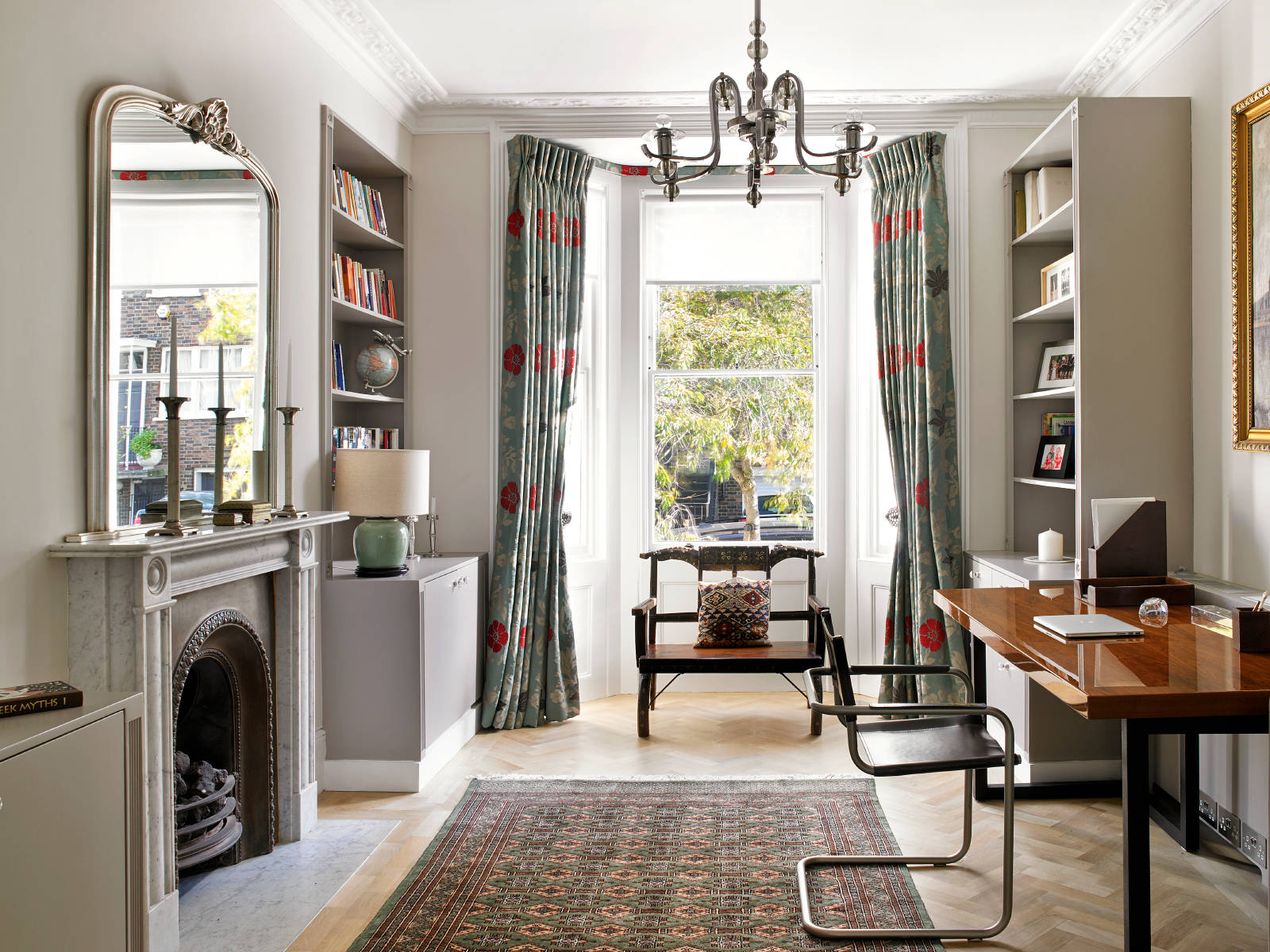
Minimalism has never really been about having less for the sake of having less. At its best, it is about knowing what deserves to remain. A beautifully proportioned sofa, a sculptural light fixture, a carefully chosen piece of art, a natural material with an exceptional texture. Every element has a purpose, and nothing is competing unnecessarily for attention.
So where do window treatments fit into the minimalist home?
For some, the instinct is to leave windows completely bare. Glass, clean lines, and uninterrupted views certainly have their appeal, particularly in contemporary architecture. But there are plenty of minimalist interiors where beautifully dressed windows actually make the space feel more restrained, not less.
The right curtain or shade can soften hard architectural lines, control the intensity of natural light, introduce subtle texture, and make a room feel finished without adding visual clutter. The secret is choosing treatments that complement the principles of minimalism rather than fighting them.
Beautifully dressed windows do not need to be elaborate. In a minimalist home, the quietest details can have the greatest impact.
Minimalism Needs Texture
One of the biggest challenges in a minimalist interior is creating depth without relying on lots of decorative objects. When the palette is restrained and furniture is carefully edited, texture becomes essential.
This is where window treatments can make a surprisingly significant contribution.
A plain linen curtain may look simple from across the room, but its natural weave creates subtle variation as light moves across the fabric. A woven roman shade introduces another tactile layer, while velvet can add depth and softness in a more dramatic minimalist space.
The key is to choose texture instead of unnecessary decoration.
Rather than adding another pattern, color, or accessory to make the room feel interesting, allow the material itself to provide the visual complexity. This approach keeps the space calm while preventing it from becoming sterile.
Choose the Right Neutral
Minimalist interiors often rely on neutral palettes, but that does not mean every window needs to be white.
In fact, slightly warmer or more nuanced neutrals can make a minimalist space feel considerably more sophisticated. Ivory, stone, mushroom, taupe, warm gray, and soft beige can all provide subtle contrast against pale walls without introducing a strong color.
Gray is particularly useful when you want a cooler, more architectural feeling. Gray window roman shades can create a defined frame around the window while remaining quiet enough to work within a restrained palette.
The important thing is to pay attention to undertones. A cool gray can feel crisp and contemporary beside white walls and concrete, while a warmer gray can sit beautifully with oak, cream, and natural stone.
Minimalism may be restrained, but it is rarely one-dimensional.
Let the Architecture Lead
In a minimalist home, the architecture should have room to breathe.
This means the window treatment should not obscure beautiful molding, unusual window shapes, or carefully considered architectural details unless there is a practical reason to do so.
Roman shades can be particularly effective when you want to preserve the clean outline of a window. An inside-mounted shade can sit neatly within the frame, allowing the surrounding architecture to remain visible.
Curtains can work beautifully too, particularly when they are mounted with enough precision to enhance rather than compete with the structure of the room.
The goal is not to make the window disappear. It is to make the treatment feel as though it belongs to the architecture.
Soft Curtains Can Balance Hard Lines
Minimalist homes often contain a lot of hard surfaces. Glass, metal, stone, concrete, wood, and clean-lined furniture create a beautiful sense of structure, but too many rigid materials can make a room feel cold.
Curtains introduce softness without compromising the architecture.
A full-length linen panel can create a gentle vertical line against a concrete wall. A softly folded fabric can contrast beautifully with the sharp edge of a steel window frame. Even when the curtain is the same color as the wall, the difference in texture can create enough contrast to make the room feel warmer.
This is one reason custom curtains can be so effective in minimalist interiors. The design does not need to be complicated. Precise proportions and beautifully considered fabric are often enough.
Keep the Silhouette Simple
If you are trying to maintain a minimalist aesthetic, the silhouette of the window treatment matters as much as the fabric.
Clean-lined roman shades, simple curtain panels, and understated hardware tend to work particularly well. Decorative swags, elaborate trims, and overly complicated headings can introduce a level of visual detail that feels at odds with the room.
That does not mean every minimalist window needs to be completely plain.
A beautifully tailored curtain with generous folds can have considerable visual presence while maintaining a simple silhouette. The sophistication comes from proportion and material rather than ornament.
This is where restraint becomes a design feature in itself.
Use Pattern, But Use It Deliberately
Minimalist homes do not have to be pattern-free.
A carefully selected pattern can actually give a restrained room a stronger sense of personality. The key is to choose a motif with enough visual space around it.
A tonal stripe, subtle geometric design, or low-contrast botanical can introduce movement without overwhelming the architecture. If you choose something more dramatic, allow the rest of the room to remain quiet.
Patterned curtains can work particularly well when the walls and furniture are relatively simple. Instead of adding multiple decorative elements, one beautifully chosen fabric becomes the room’s point of interest.
The pattern should feel intentional rather than busy.
Layer Without Creating Clutter
Layering window treatments may sound like the opposite of minimalism, but it depends entirely on how the layers are handled.
A sheer roman shade beneath simple curtains, for example, can provide privacy and light control while maintaining an extremely clean appearance. The two treatments perform different functions, so the additional layer has a practical purpose rather than simply adding decoration.
Sheer roman shades can be particularly useful in rooms where you want to preserve natural light. They soften sunlight and provide daytime privacy while keeping the window visually light.
The same principle applies to curtains and roman shades. If each layer has a distinct role, the result can feel considered rather than excessive.
Minimalism is not about refusing layers. It is about refusing unnecessary ones.
Consider the Way Light Moves Through the Room
Natural light is one of the most important elements in minimalist interiors. When there are fewer decorative objects, changes in light become more noticeable.
This makes the choice of window treatment particularly important.
A heavy fabric can dramatically alter the atmosphere of a room, while a sheer or lightweight material can allow daylight to remain central to the design. Translucent fabrics can create a soft glow, while lined curtains can provide greater control when sunlight becomes too intense.
Think about the room throughout the entire day rather than choosing a treatment based only on how it looks at midday.
Morning light, afternoon glare, and evening darkness all change the relationship between the window and the rest of the interior.
A beautiful window treatment should work with those changes rather than simply covering them.
Customization Matters More in Minimalist Spaces
There is an interesting paradox to minimalism: when there are fewer elements in a room, each element becomes more noticeable.
A slightly awkward curtain length that might disappear among layers of traditional decoration can become glaring in a minimalist interior. A roman shade that sits unevenly inside its frame can disrupt the clean geometry of the room.
This is where custom roman shades and custom drapes can make a meaningful difference.
Customization allows the treatment to respond precisely to the architecture, including unusual window dimensions, specific mounting requirements, desired fullness, and fabric behavior.
When the design itself is restrained, precision becomes part of the aesthetic.
Don’t Forget the Hardware
Minimalist interiors tend to reveal hardware rather than hiding it behind layers of decoration, which means the rod, brackets, and other functional elements deserve consideration.
Choose hardware that supports the overall design rather than competing with it. Simple black, brass, stainless steel, or understated metal finishes can work beautifully depending on the rest of the room.
The hardware does not have to disappear.
It simply needs to feel intentional.
A beautifully chosen curtain rod can provide a subtle architectural line, while an unnecessarily ornate one can introduce visual noise.
Minimalist Does Not Mean Impersonal
Perhaps the biggest misconception about minimalism is that a room must be almost completely devoid of personality.
In reality, the most successful minimalist interiors often feel deeply personal. They simply express that personality through fewer, more meaningful choices.
A beautiful fabric at the window can be one of those choices.
Maybe it is a linen curtain in a shade that echoes the landscape outside. Perhaps it is a textured roman shade that complements the grain of the oak cabinetry. Maybe it is a quiet geometric pattern that introduces just enough character against a plain wall.
The treatment becomes part of the identity of the room without overwhelming it.
Let the View Become Part of the Design
Minimalist homes often place a strong emphasis on the relationship between indoors and outdoors. Large windows, expansive glazing, and carefully framed views can become architectural features in their own right.
If you are lucky enough to have a beautiful view, your window treatment should enhance it rather than compete with it.
Simple curtains can frame the landscape when open, while sheer shades can soften the glass without completely obscuring what lies beyond. If privacy is not a concern, the simplest treatment may be the most appropriate.
But even a beautiful view benefits from thoughtful framing.
Like a picture frame around artwork, a window treatment can define where the eye should look.
Use Valances Only When They Serve the Room
Traditional decorative treatments can have a place in minimalist or transitional homes, provided they are carefully edited.
A custom window valance, for example, can work when you want to introduce a small amount of pattern or conceal hardware without adding full-length curtains. The key is to keep the shape clean and the fabric considered.
A simple tailored valance in a textured neutral can feel remarkably contemporary, particularly when paired with streamlined furniture and a restrained palette.
The treatment should support the architecture rather than become a decorative object competing with it.
The Most Beautiful Minimalist Windows Are Intentional
A minimalist home does not require bare windows. It requires thoughtful ones.
The best treatments are often quiet enough that you notice their effect before you notice the treatment itself. The room feels softer. The proportions feel better. The light is more comfortable. The architecture looks more considered.
That is the real case for beautifully dressed windows.
A well-chosen curtain or shade does not necessarily add visual clutter. It can actually remove it by giving the eye a clear, intentional frame around one of the largest architectural features in the room.
Choose restrained silhouettes. Prioritize beautiful materials. Use texture to create depth, color to establish subtle contrast, and pattern only when it contributes something meaningful. Pay attention to proportion and allow natural light to remain part of the design.
Minimalism is not about leaving everything bare.
It is about making every choice count.
And when the windows are treated with the same thoughtfulness as the furniture, walls, lighting, and architecture, they stop looking like an unfinished part of the room and start looking exactly what they should have been all along: an essential part of the design.
